
Jakarta (UTC+7) | Yufy Firdiansyah, S.Sos., M.M
Navigating modern foreign exchange markets requires a firm grasp of macroeconomic plumbing and institutional order flow. Three core pillars dictate USD pairs across global and emerging markets: Federal Reserve balance sheet dynamics, sovereign yield benchmarks, and options-driven liquidity structures. To unlock these institutional analytics in real time, you can access them by subscribing to Currenomy Pro.
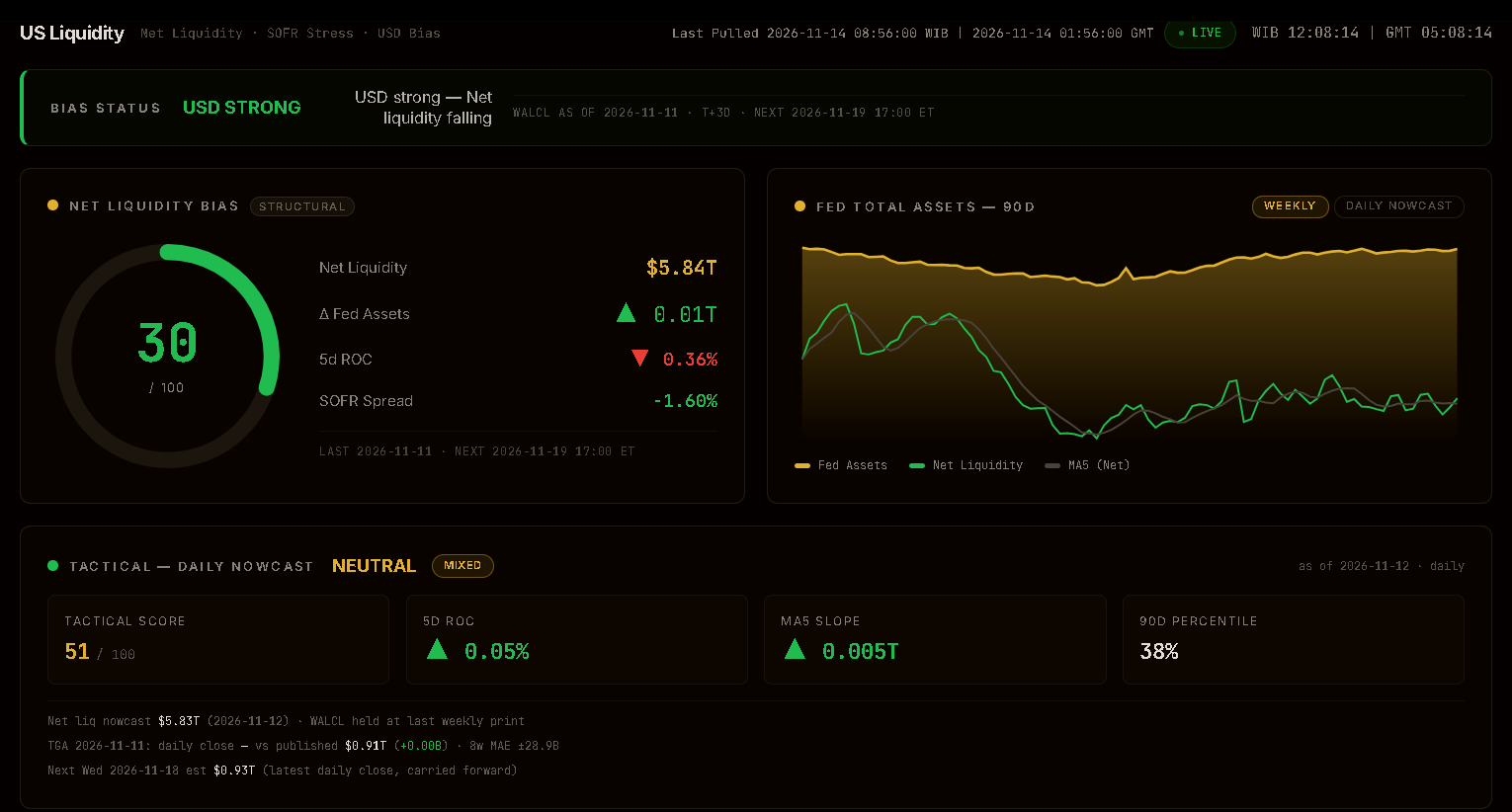
Federal Reserve liquidity plumbing serves as the ultimate macro baseline. As tracked via net liquidity gauges, shifts in central bank total assets and Treasury General Account balances directly modulate commercial bank reserves. When net liquidity trends downward, structural USD strength emerges, creating funding pressures that ripple across emerging market currencies and regional debt instruments.
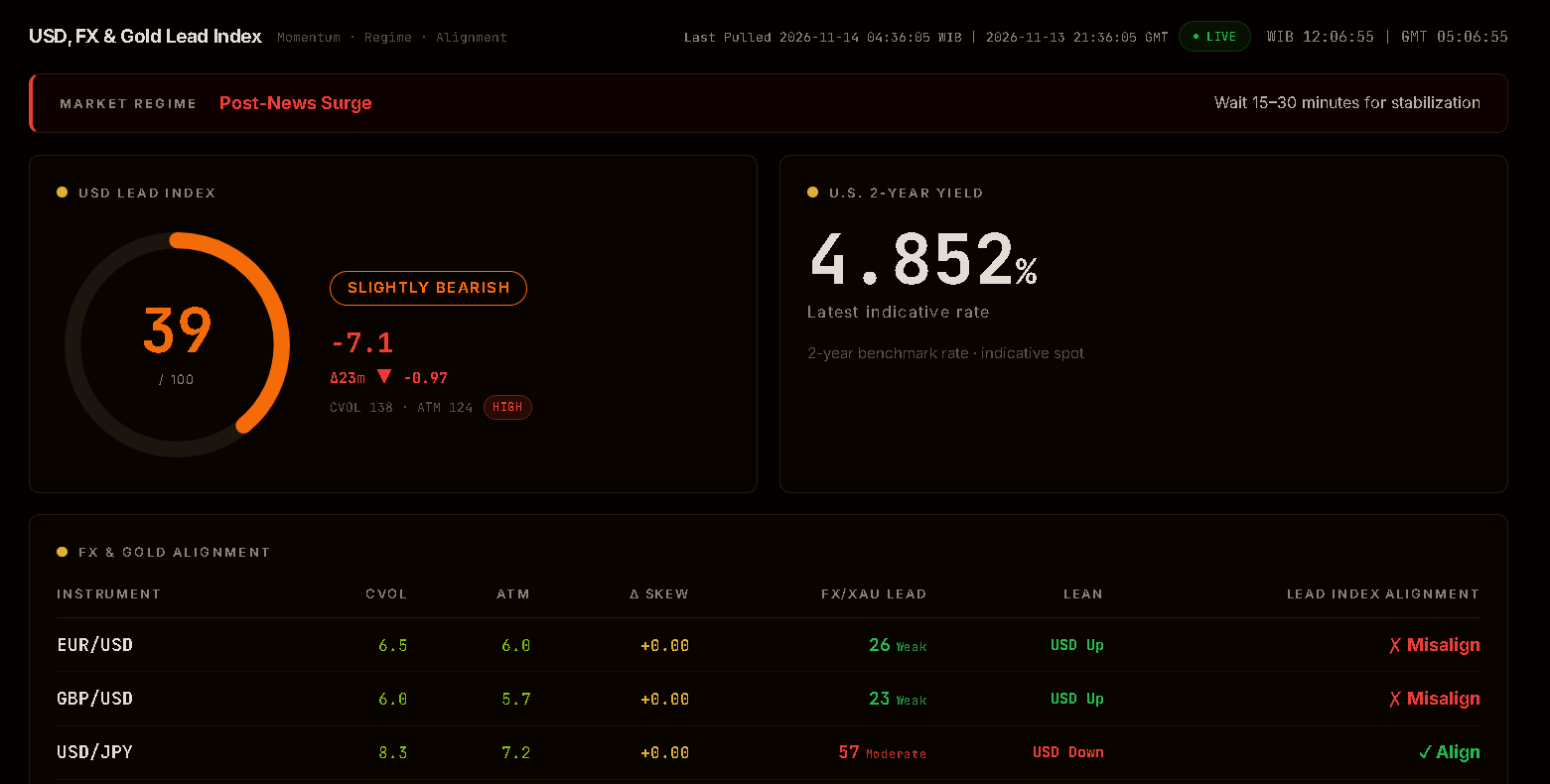
On the tactical front, cross-asset volatility is heavily informed by rate differentials. Evaluating the U.S. 2-year yield alongside the USD Lead Index highlights momentum shifts and misalignments in major pairs like EUR/USD and GBP/USD. When yield valuations diverge from currency direction, traders gain crucial foresight into potential mean-reversion windows or regime adjustments.
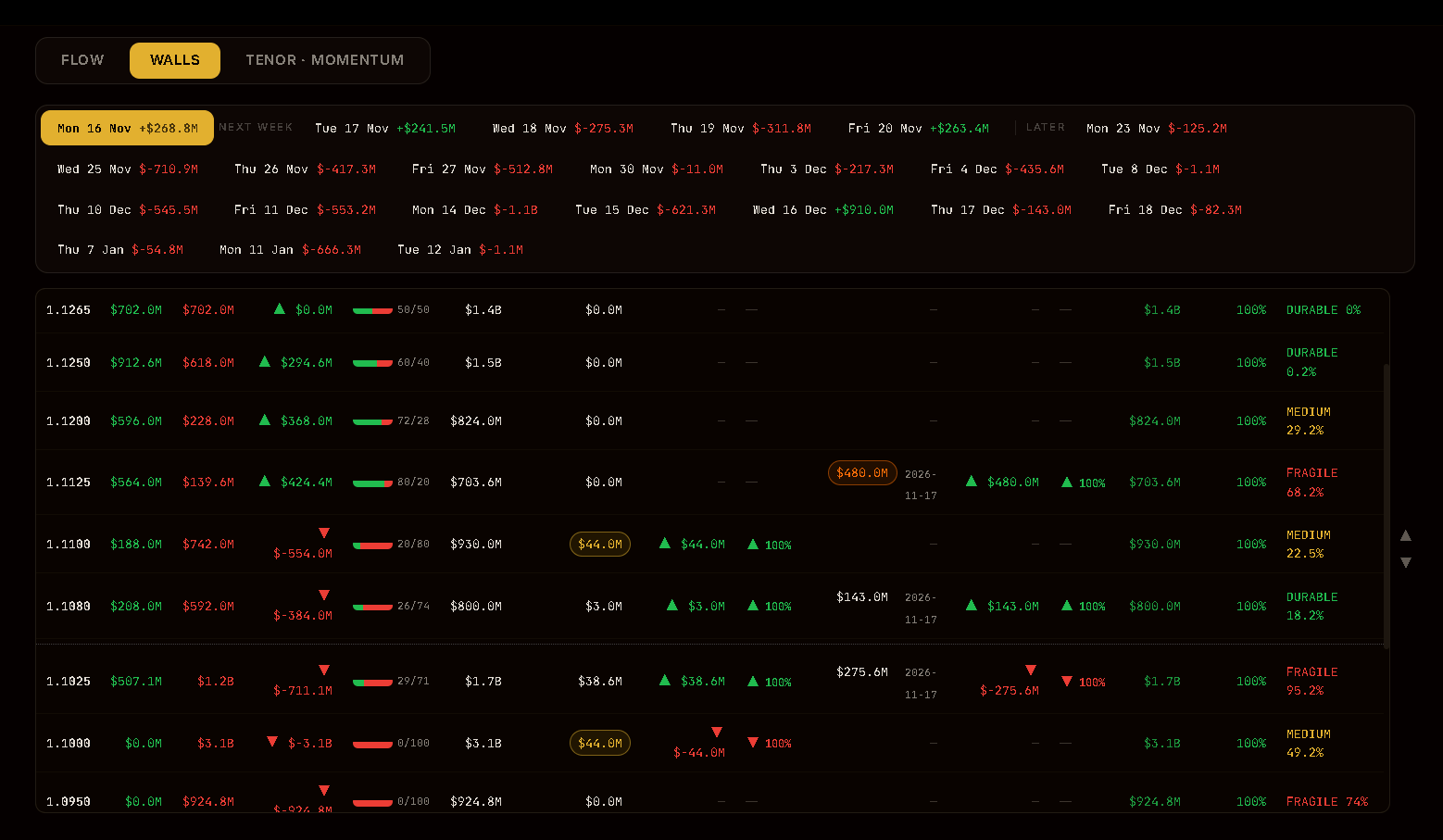
Finally, intraday execution relies on deciphering derivative order flows. Monitoring heavy option strike walls and cumulative notional volumes reveals institutional pinning magnets. Prior to the New York Cut expiry window, these localized liquidity pools often act as gravitational targets, pulling spot prices toward high-gamma strike clusters as market makers rehedge exposures.
#Currenomy #MacroFinance #ForexTrading #FederalReserve #OptionFlow #Yield #Bond #Forex #NetLiquidity #TGA #QRA #Settlement